
 English
On modern granular material production lines, the measuring cup type granular packaging machine is a key equipment for achieving automated and standardized packaging. It completes the entire process from bulk materials to finished packaging bags through precise measuring cups, high-speed bag-making, sealing and cutting. However, its efficient and stable operation is by no means a one-time effort. Scientific and systematic maintenance and upkeep are the cornerstones for ensuring its long-term performance, production safety and economic benefits. Neglecting maintenance not only leads to direct problems such as inaccurate measurement, poor sealing and frequent malfunctions, but also may cause huge production losses due to unplanned shutdowns, and even significantly shorten the overall service life of the equipment due to accelerated wear and tear. This guide aims to provide equipment managers and operators with a standardized and operational maintenance framework. Through standardized operations, it aims to minimize equipment failure rates and keep packaging machines in the best operating condition at all times.

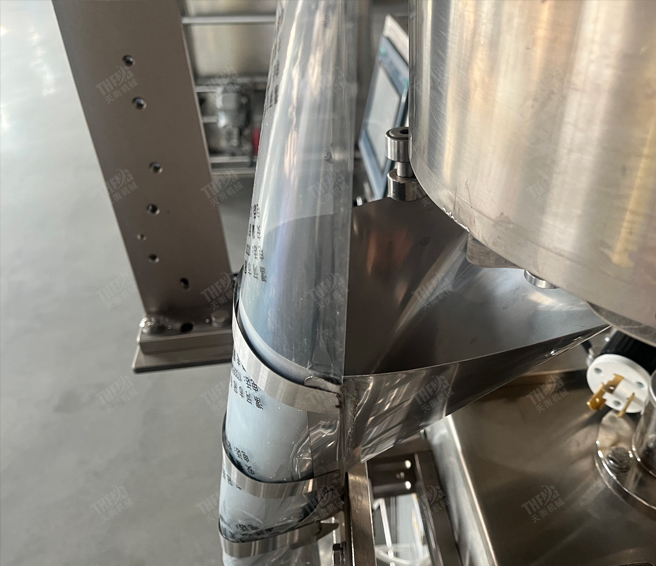
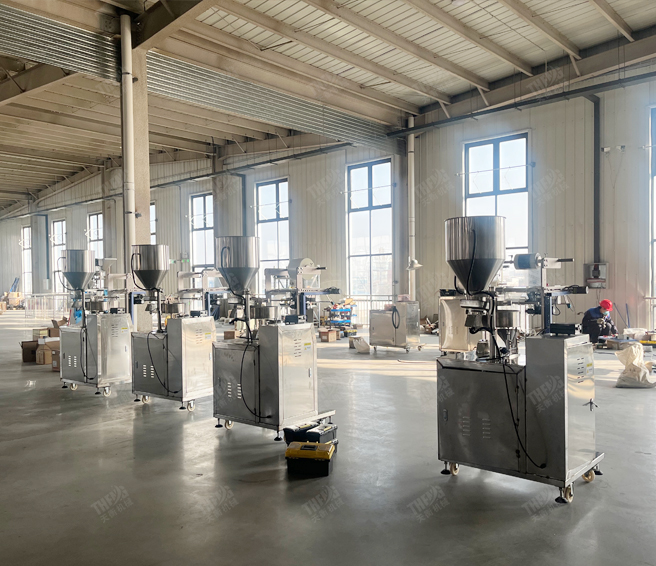
Before the start of daily production, about 15 minutes of inspection and preparation should be carried out, which is crucial for ensuring the smooth operation of production throughout the day.
Safety and mechanical condition inspection: First, observe the surrounding environment of the machine to ensure there are no miscellaneous items piled up and the passageways are unobstructed. Rotate the main motor belt by hand and try to turn the main shaft to feel if the machine rotates smoothly and if there is any jamming or abnormal noise. Check whether all safety guards are in good condition and installed properly.
Lubrication point inspection and replenishment: According to the equipment requirements, replenish the designated lubrication points. For instance, the CAM and bevel gears of the semi-automatic particle measuring cup packaging machine should be lubricated with food-grade oil once before each shift. At the same time, check the machine oil gauge to ensure that the lubricating oil level is within the normal range.
Heat sealing system: Connect the power supply, set and preheat the heat sealing knife. According to the characteristics of packaging materials (such as polyethylene, composite film, etc.), the temperature is usually set between 100℃ and 110℃ on the control panel, and the horizontal sealing temperature is generally about 10℃ higher than the vertical sealing temperature. Wipe the surface of the heat sealing knife with a clean high-temperature resistant cotton cloth to remove the residual film debris from the previous day.
Measuring cup and discharging system: Open the hopper and check whether there is any material residue or lumps inside the measuring cup and in the discharging channel. If so, it is necessary to clean it thoroughly with a soft-bristled brush or compressed air to ensure that the metering chamber is smooth and clean. This is the prerequisite for ensuring the consistency of the weight of each bag.
Film feeding path: Check the installation of the packaging film to ensure that the film flows smoothly and without deviation on the release reel, guide roller, and former. The film can be manually pulled to run idle for a certain period of time to observe whether the bag-making process is smooth.
Materials and Cleaning: Firstly, all remaining materials in the hopper, measuring cup turntable and all feeding pipes must be thoroughly emptied. This step is particularly important for materials that are prone to moisture absorption and caking. Use dedicated tools and food-grade cleaners to wipe all surfaces in contact with the material, including the material tray, copper sleeve, guide groove, etc.
Maintenance of the heat sealing system: After the temperature of the heat sealing knife has naturally cooled to a safe range, clean the surface of the heat sealing knife and the silicone pressure strip again with a copper wire brush or high-temperature resistant cloth. Pay special attention to removing the dirt on the edge of the sealing line. Note that the silicone strip is relatively soft in texture. It is strictly forbidden to clean it with a copper wire brush to avoid scratches. Instead, wipe it with a soft cloth.
Equipment reset and protection: After cleaning is completed, wipe off all oil stains and dust on the surface of the equipment. If the equipment is planned to be shut down for a long time, the heat sealing knife should be kept open to protect the elasticity of the silicone strip. Finally, in accordance with the factory management regulations, hang a “Cleaned” status sign.
Mechanical component inspection and tightening: After the machine stops and the power is cut off, systematically inspect the fastening bolts and screws of all parts of the machine, especially those with significant vibration, such as bearing housings, motor bases, and frame connection points, to prevent accelerated wear due to loosening. Check the tension of the drive belt or chain. If it is too loose, it is prone to slipping; if it is too tight, it will increase the load.
Preliminary inspection of the electrical system: Open the electrical control cabinet and gently blow it with dry compressed air to remove dust and flocs inside. Visually inspect the main terminal blocks for any signs of looseness, charring, blackening or patina oxidation. Check the transmitting and receiving lenses of each photoelectric sensor, wipe them clean with lens paper to ensure the signal is sensitive.
Assessment of the condition of vulnerable parts: Evaluate the sharpness of the cutter. If the cut edge of the finished bag shows burrs, streaks or the blade is connected, it indicates that the blade is blunt. It needs to be ground by a professional with a special whetstone to keep the edge Angle consistent. Check whether the sealing rings at all parts are aged or cracked. Replace them preventive if necessary.
Heat sealing knives and silicone pressure strips: These are the lifelines of sealing quality. The heat sealing knife should maintain a smooth surface and uniform temperature. If there are scratches, they can be gently sanded smooth with fine sandpaper of 800 mesh or above. The heating tubes inside are vulnerable parts. If the temperature on the knife surface is found to be uneven during inspection, it may be that some of the heating tubes are damaged and the entire set needs to be replaced. Silicone rubber pressure strips are responsible for providing uniform sealing pressure. Their hardness and surface flatness need to be checked. Once depressions, cracks or permanent deformations occur, they must be replaced immediately; otherwise, it will cause air leakage at the seal.
Cutting knife: Keeping the blade sharp is the prerequisite for ensuring the bag shape is beautiful and the cutting is smooth. On a daily basis, it can be judged by observing the cut. Once burrs, broken knives or increased cutting noise appear, the knife needs to be sharpened or replaced. Under continuous production conditions, the lifespan of a cutter is typically about 3 to 6 months. The replacement cycle should be determined based on the actual packaging volume and material characteristics.
Measuring cup assembly: For measuring cup-type measurement, the consistency of the measuring cup’s capacity is of vital importance. The volume of all measuring cups should be checked regularly. Standard volume blocks or weighing methods can be used for comparison. For measuring cups with capacity exceeding the tolerance due to wear or impact, they should be replaced in time to ensure measurement accuracy.
Possible cause: There is material adhering or clumping inside the measuring cup. Partial blockage of the feed inlet or discharge channel; The adjusting device of the measuring cup is loose. The material properties have undergone significant changes.
Processing steps
1. Stop the machine and thoroughly clean the measuring cup and the entire feeding path.
2. Check and tighten all the fixing bolts of the measuring cups.
3. Check the material status. If there are any changes, re-adjust the measurement parameters.
4. Perform single-point calibration on the metrology system using standard weights.
Possible cause: Improper setting of the heat sealing temperature; Insufficient sealing pressure or aging of the silicone strip; There are foreign objects or unevenness on the surface of the heat-sealing knife. The packaging materials are not suitable.
Processing steps
1. Clean the heat-sealing knife face and the silicone strip.
2. Check the actual temperature with a thermometer and adjust the Settings of the temperature controller.
3. Check and adjust the sealing pressure, or replace the aged silicone strip.
4. Confirm whether the packaging material is suitable for this model and the temperature setting.
Possible causes: Uneven pressure on the traction roller or wear of the rubber layer; The unwinding tension of the film is unstable. There is dirt inside the mold or it has been improperly adjusted. The calibration point sensor is dirty or has a sensitivity drift.
Processing steps
1. Clean the photoelectric eye lens and check its position and focus.
2. Clean the former and check whether the film flows smoothly and unobstructed in it.
3. Check and adjust the pressure and the uniformity of the gap of the traction roller.
4. Check the unwinding brake or tension control system.

