
 English
“My chili powder seems to lose its aroma after being mixed.” “Will the powdered milk form lumps or lose its nutrients when being stirred?” – These are among the most concerning issues that many food enterprises have when choosing powder mixing equipment. Heat sensitive powder in the mixing process, once the temperature rise is too high, light loss of aroma, color dark, heavy will lead to Maillard reaction, fat oxidation and so on. So, how much does the double-screw powder mixer commonly used in industry heat up during normal operation? Under what circumstances will it endanger the quality of the materials? And how can the temperature rise be effectively controlled? This article will analyze these issues for you one by one.
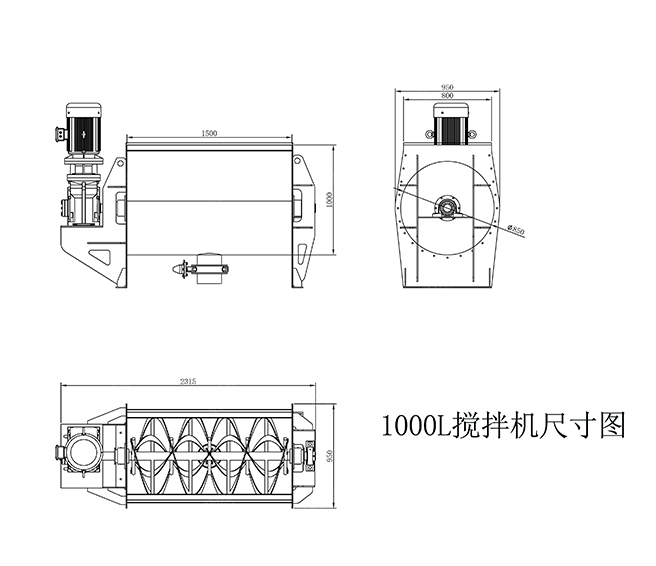
Stainless Steel Ribbon Blender
Food Powder Horizontal Mixing Machine

How is heat generated?
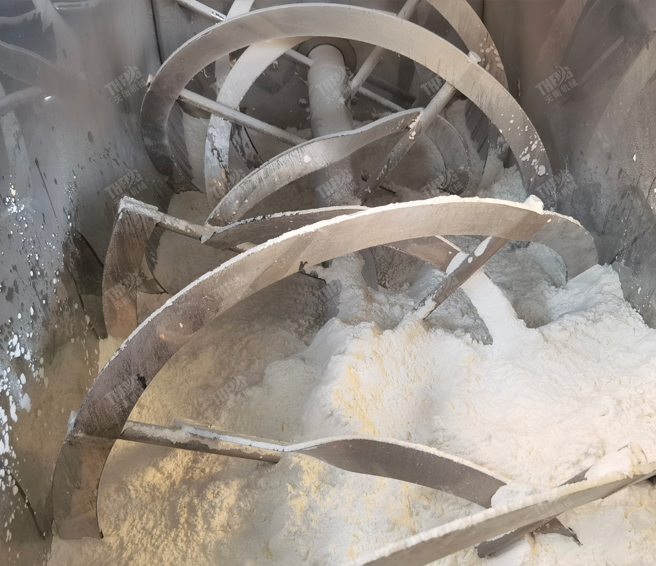
The double-screw agitator relies on two spiral bands inside and outside rotating at a low speed around the main shaft to push the material to form axial convection and radial tumbling within the cylinder. The main mechanism is “pushing” and “folding”. The heat generated mainly comes from mechanical friction heating and heat transfer from the transmission system.
The friction generated by the relative movement between the screw belt and the material.
The collision and sliding between the material particles.
When the motor and reducer operate, they generate heat which is conducted to the barrel through the shaft and the frame. Poor heat dissipation can slightly affect the material.
Conclusion:Under the conventional process conditions (mixing time ≤20 minutes, ambient temperature ≤25℃), the temperature change is usually within 5~8℃ during the operation of the double screw belt mixer. For most spices (such as black pepper, star anise powder, turmeric powder), the thermal decomposition temperature of their volatile substances is generally higher than 60℃; Lactose and protein in milk powder are relatively stable below 40 ° C. Therefore, the temperature of 5~8℃ will not lead to product quality change.
What situations can lead to abnormal temperature rise?
Excessive mixing time. Some users are concerned about “inadequate mixing uniformity” and extend the mixing time to over 40 minutes. As the materials repeatedly rub against each other, heat accumulates and the temperature rise may exceed 15℃. The shortest mixing time should be determined through uniformity tests (generally, CV ≤ 5% is acceptable).
The filling volume is inappropriate. If the filling volume is too low, the materials will be thrown vigorously inside the container, causing additional heat due to the impact on the container walls. If the filling volume is too high, the materials cannot be properly stirred, resulting in heat generated from local accumulation and friction. The filling rate should be maintained between 40% and 70%.
The initial temperature of the materials is too high or their viscosity is too large. If the raw materials are put into the mixer immediately after coming out of the dryer, the temperature will further increase after mixing. Materials with high sugar and fat content have a larger friction coefficient and generate more heat. The raw materials should be cooled down before being mixed, or a mixer with a cooling device should be selected.

Temperature control measures
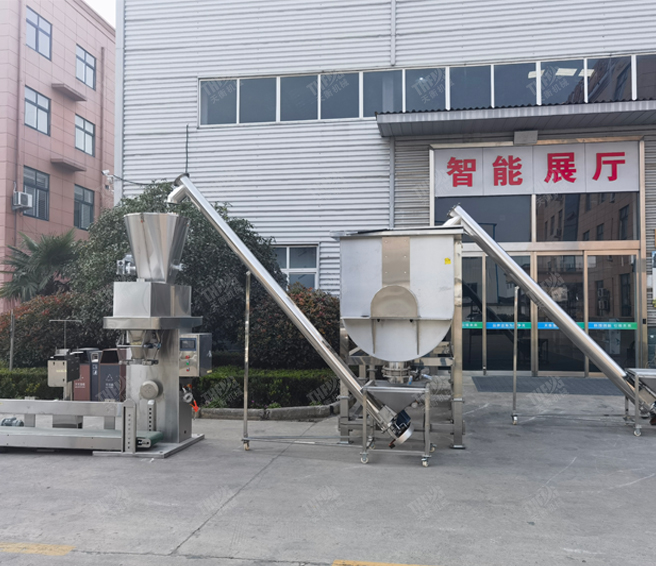
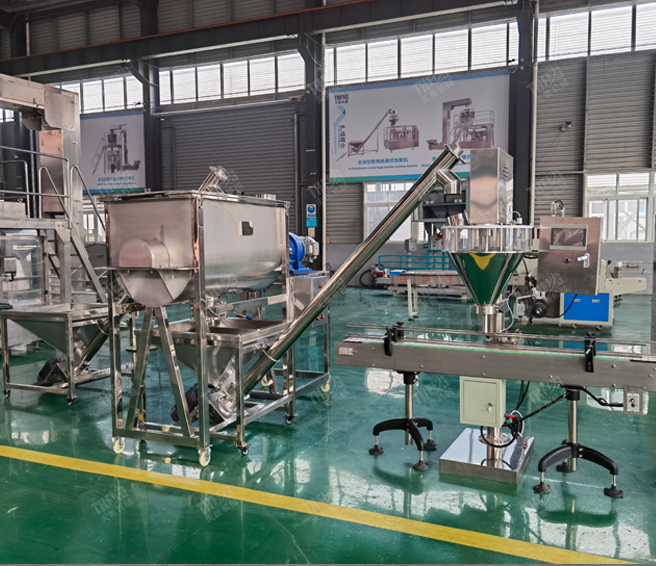
Variable frequency speed control. Reduce the speed of the helical ribbon to decrease the frictional heat. It is suitable for all heat-sensitive materials, especially milk powder, flavoring, etc.
Cooling jacket. Welds a jacket to the outer wall of the barrel and introduces 5-10℃ cooling water or freezing liquid to continuously remove heat. Suitable for infant milk powder, chocolate powder, pharmaceutical excipients, etc.
Intermittent mixing. Mix for 5 min, stop for 2 min, and continue mixing after heat is dissipated. Suitable for small batches and high-value materials.
Install inner wall scrapers. Reduces material adhesion and local friction. Suitable for highly viscous and highly oily powders (such as cheese powder).
Q&A
Q1: We used to use the high-speed mixer before, and it was always hot to the touch. Is the double screw really not hot?
A: Yes. The speed of the twin screw belt is 1~1.5m/s, which belongs to the “slow push”, usually lower than 40 ° C, not hot.
Q2: At the end of mixing, it feels hot to touch the barrel wall. Is the material inside so hot?
A: Not necessarily. The metal container’s wall conducts heat quickly. When the ambient temperature is high, the container’s wall may be 2 to 3 degrees Celsius hotter than the contents. For accurate measurement, the temperature probe inserted into the middle of the material should be relied on.
Q3: Is there a way to ensure low temperature without using a cooling jacket?
A: Yes. For most spices and milk powders, as long as the raw material temperature is ≤ 25℃, the mixing time is ≤ 15 minutes, and the environment is kept at a constant temperature by air conditioning, the discharged material can be ensured to be ≤ 32℃. Active cooling is recommended only when the room temperature exceeds 30℃ or the material itself is below 10℃ (during thawing).

